 Locked Lessons
Home › AP® Latin › Vergil, Aeneid 1.1–33
AP® Latin passage guide · Vergil, Aeneid 1.1–33
Vergil, Aeneid 1.1–33: The Proem and Juno's Anger
What happens
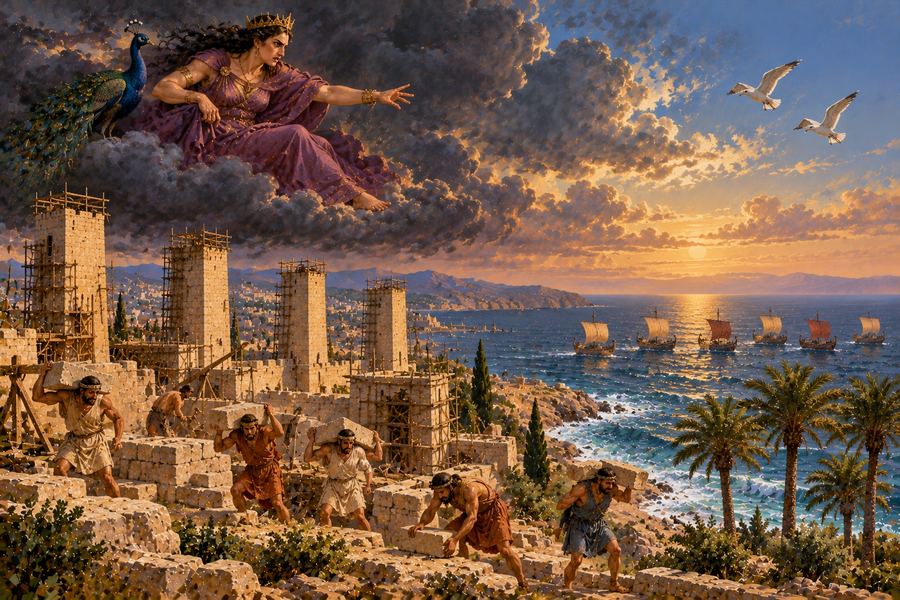
Vergil announces his subject: arms and the man, the Trojan exile driven by fate to Italy, tossed on land and sea by the gods and the unforgetting anger of cruel Juno, until he could found a city and bring his gods to Latium, the beginning of the Latin race, Alba Longa and the walls of Rome.
He asks the Muse to tell the causes: why did the queen of the gods drive a man famous for his devotion through so many disasters? Can heavenly minds hold such anger?
The answer is Carthage, Juno's favourite city, which she hopes will rule the world, but which, she has heard, a race sprung from Trojan blood will one day overthrow. She also remembers the Judgement of Paris, the slight to her beauty, and Ganymede. So she keeps the Trojans far from Latium, wandering for years. The passage ends with the famous line on the cost of Rome: so great an effort it was to found the Roman race.
Grammar to look for
- Purpose and anticipatory clauses with dum: dum conderet urbem, “until he could found a city”
- Indirect question containing an ablative absolute: quō nūmine laesō, “with what divine will offended”
- Genitive of quality with an impersonal verb: Tantae mōlis erat Rōmānam condere gentem, “so great an effort it was to found the Roman race”
Style
- A programmatic opening: Arma virumque canō. The poem's subject in three words, recalling the Iliad (war) and the Odyssey (the man).
- Rhetorical question: tantaene animīs caelestibus īrae. The poet's own question about divine anger.
- Enjambment and climax: altae moenia Rōmae. The proem ends on the walls of Rome.
- Interlocking word order: saevae memorem Iūnōnis ob īram. Adjectives and nouns framed around the goddess's name.
Themes to think about
- Fate against the will of the gods
- Pietas: Aeneas as a man 'famous for duty'
- The cost of founding Rome
- Carthage and Rome: the Punic Wars foreshadowed
Practise this passage
Juno's Anger is a self-grading escape room built from this passage's own vocabulary, with a grammar lock on the irregular verb ferō. It takes about one lesson.
Play the free taster (2 of 7 locks)About the room
More passage guides
- Vergil, Aeneid 1.88–107 and 496–512: The Storm and Dido
- Vergil, Aeneid 2.40–56 and 201–249: Laocoön and the Wooden Horse
- Vergil, Aeneid 4.74–89 and 165–197: Dido's Love, the Cave and Fama
- Vergil, Aeneid 4.305–361: Dido and Aeneas Quarrel
- Vergil, Aeneid 6.450–476, 788–800 and 847–853: Dido's Shade and Rome's Mission
- Vergil, Aeneid 7.45–58 and 783–817: Latinus, Turnus and Camilla
- Vergil, Aeneid 11.532–594: Diana's Story of Camilla
- Vergil, Aeneid 12.791–828 and 919–952: Juno's Reconciliation and the Death of Turnus
AP® and Advanced Placement® are registered trademarks owned by the College Board, which is not affiliated with Locked Lessons and does not endorse it or its escape rooms.