 Locked Lessons
Home › Guides › Escape rooms for a classical education
Teaching guide
Escape rooms for a classical education
A classical education asks a great deal of students' memory and of their reading: the endings of a Latin noun, the roots inside an English word, the names in Homer, who did what to whom in the third act of a play. Teachers need a quick, honest way to find out whether that knowledge is really there, and students need practice that does not feel like another worksheet. This guide explains how self-checking digital escape rooms can do both jobs, and where they fit in a classical curriculum.
What a digital escape room is
A digital escape room is a set of puzzles, called locks, that students solve in a web browser. Every room on Locked Lessons has seven locks. Each one checks itself: when the answer is right, the lock opens and the next part of the room appears. In most rooms each lock also earns a word, and at the last lock students put two of those words together to answer a final clue.
The rooms work in any browser, on a Chromebook, laptop or tablet. There are no logins, no student accounts and nothing to install. Progress is saved in the browser, so a room that is not finished in one lesson can be picked up in the next.
Why the format suits the three stages
Many classical schools and homeschools organise learning around the trivium, an idea made popular by Dorothy Sayers' 1947 essay The Lost Tools of Learning: a grammar stage for gathering knowledge, a logic stage for reasoning about it and a rhetoric stage for expressing it well.
Escape rooms serve the grammar stage most directly. Crosswords, scrambled names and matching locks are recall practice: students have to bring back names, words and facts, not just recognise them. The logic stage is served by the odd-one-out lock, which asks students to see why one item in a set does not belong, and that means classifying and giving reasons. For the rhetoric stage, a room is not a substitute for an essay or a seminar, but it is a fast way to make sure everyone knows what happened before discussion begins, so the conversation can start from interpretation rather than plot summary.
Where the rooms fit across the curriculum
The rooms are arranged by subject, so you can find what matches the term's work:
- Latin for Latin I to IV, with seasonal rooms through the year, and AP® Latin rooms on the required readings from Pliny and Vergil.
- Classical Greek for beginners.
- Greek and Latin roots for English vocabulary, from grade 4 to high school.
- Homer and Virgil: the Iliad, the Odyssey and the Aeneid in English translation.
- Shakespeare, with a room for every act of twelve plays.
- The classics, from Aesop and Alice to Dante, Austen and Dostoevsky, arranged by stage.
- Greek and Roman mythology from grade 4, and the Chronicles of Narnia, one room per book.
When to use a room
Rooms work best at natural joints in the course. The most common use is a check after a section of reading: a few chapters of a novel, four books of Homer, an act of a play. Others work well as review before a test, as a first lesson back after a holiday, at the end of a term, or as a lesson a colleague can run while you are away, since the answers check themselves. Most rooms take one lesson; students can work alone or in pairs, or you can project a room and solve it together as a class.
What a room is not
An escape room will not read the book for anyone, and it is not a translation exercise or a discussion. What it does is tell you, and the student, whether the reading has stuck. Because each lock checks itself, students know at once when they are wrong and have to look again, and if you walk round while they work you will see exactly where a class stalls. A group that cannot match the characters in a play has lost track of who is who, and that tells you what to revisit next lesson.
Getting started
Choose a subject, open a room and try the first lock yourself before you share it. Every room has free taster locks that anyone can try with a class, with no sign-up. Members get all seven locks of every room and a private class link to share. There is a short summary of the process on the How it works page, and the other teaching guides go into each subject in more detail.
Rooms to try
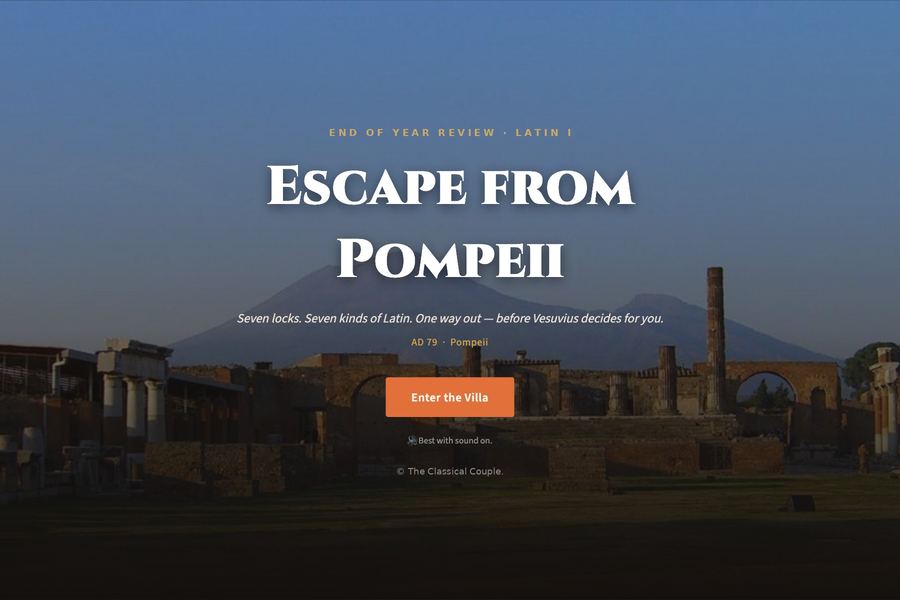 Latin I · End of YearEscape from PompeiiFree taster
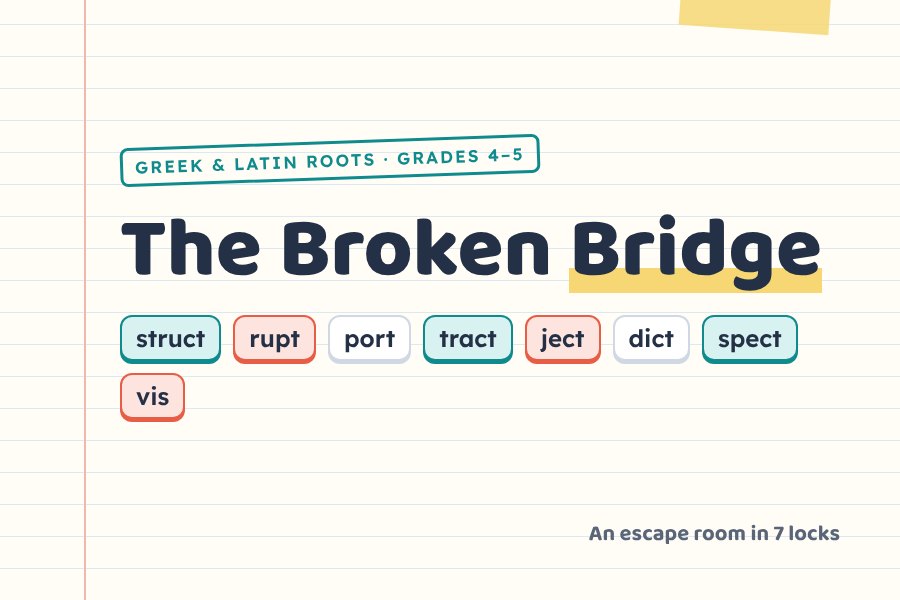 Grades 4–5 · RootsThe Broken BridgeFree taster
 Aesop's Fables · Clever and Foolish AnimalsThe Fox's TricksFree taster
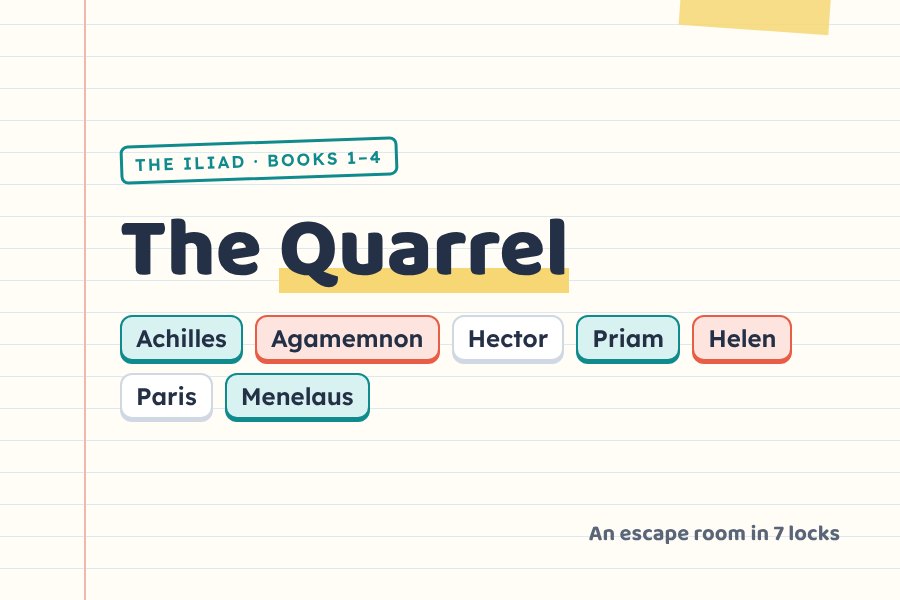 The Iliad · Books 1–4The QuarrelFree taster
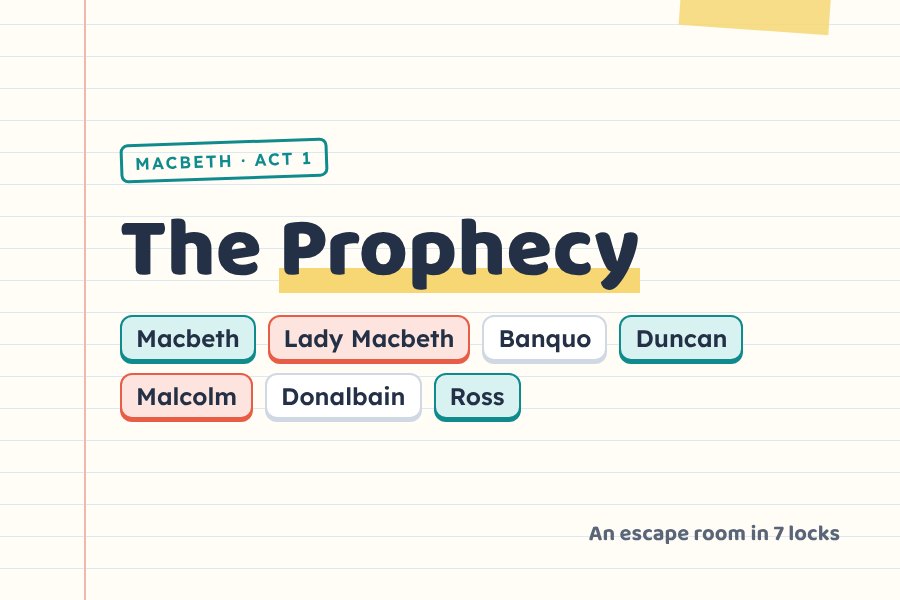 Macbeth · Act 1The ProphecyFree taster
 C. S. Lewis · Book 1The Lion, the Witch and the WardrobeFree taster
Questions
Do escape rooms suit a classical school?
Yes, as one tool among many. They are recall and reasoning practice with immediate feedback, which suits the grammar and logic stages well, and in the rhetoric stage they make a quick check on reading before discussion or writing.
Which ages are the rooms for?
From about grade 3 to grade 12. Grammar-stage books and the first roots and mythology rooms start at grades 3 or 4; Shakespeare is pitched at grades 8–12; Latin runs from Latin I to AP® Latin.
Do students need accounts or an app?
No. Students open a link in any browser on a Chromebook, laptop or tablet. There is nothing to install, and progress is saved in the browser.
More guides
- How to use digital escape rooms in a homeschool
- Grammar-stage literature: books for grades 3–6 and how to check reading
- Starting Latin: what a first year looks like
- All teaching guides
AP® and Advanced Placement® are registered trademarks owned by the College Board, which is not affiliated with Locked Lessons and does not endorse it or its escape rooms.